
A K Dolven and the Porcelain Bouquet
Blickwechsel: Schenkung Sammlung Hoffmann / Porzellansammlung
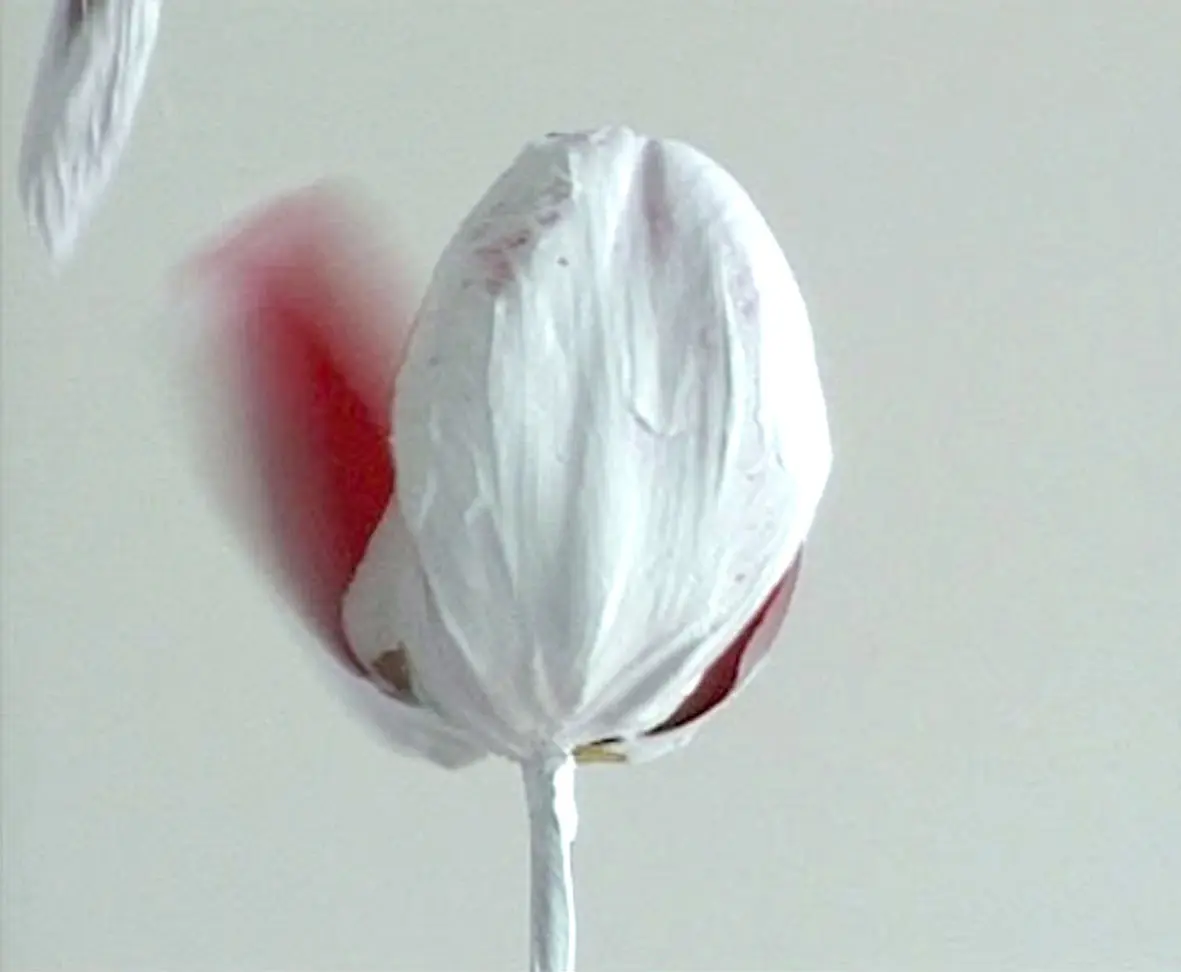
The history of visual art is also a history of mimesis, that is, the human preoccupation with imitating nature. Even the earliest known human pictorial representations – Stone Age cave paintings – relate to nature and attempt to capture its forms. The Norwegian artist A K Dolven thematizes this drive to imitate in her work „still live“, taking it to the extreme. Instead of putting the flower, a tulip, on a canvas – and thus making an image of it – she turns it into a canvas. She paints it with white paint and captures the process in her video installation.
- Exhibition Site Zwinger
- Dates 12/05/2026—13/12/2026
-
Opening Hours
daily
11—17, Monday closed
Reformation Day,
31/10/2026
11—17
Buß- und Bettag,
18/11/2026
11—17
07/09/2026 — 30/10/2026 closedPlease note that the Porcelain Collection will be closed from 07.09.—30.10.2026.
Das Verhältnis
Dolven also foregrounds the relationship between the natural and the artificial or artistic parts by playing back the process of painting – the transformation of nature into an image – in reverse in her video. The flower, which is initially white and indeed resembles porcelain, slowly “sheds” paint to reveal its actual colour, returning to its natural state. In the process, the tulip appears at once fragile and brimming with life. Finally, an encounter with this work elicits questions about the human imitative drive and about the relationship between nature and its representation. These questions also arise in the current juxtaposition of Dolven’s work with the porcelain bouquet of 1749 which, like hardly any other exhibit in the Porzellansammlung, represents an imitation of nature brought to perfection through the highest level of craftsmanship.
slider

In the “contrast”
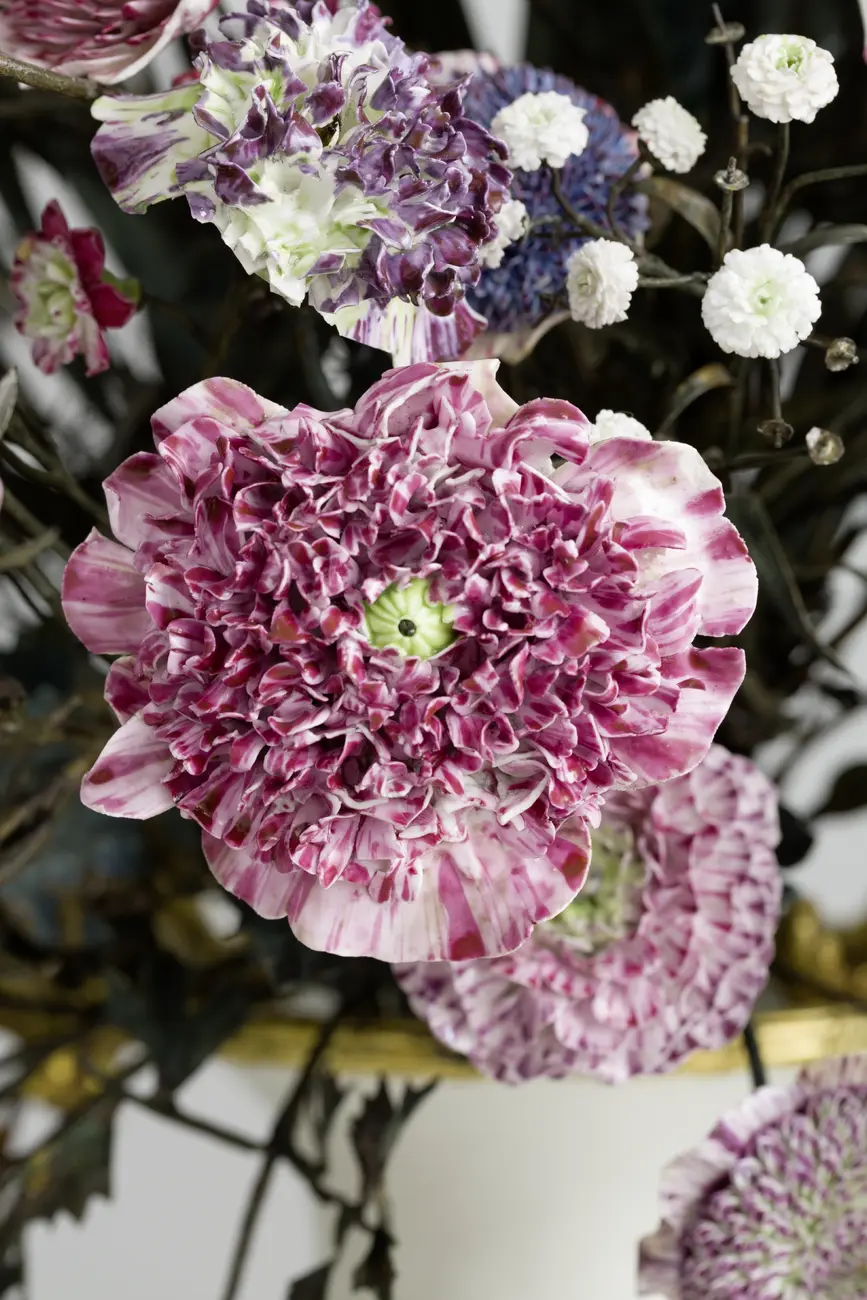
In the “contrast” with the porcelain bouquet made in France in 1749, the tension between nature and artistic imitation is particularly evident. Crafted from soft-paste porcelain, the bouquet captivates with its almost deceptively lifelike quality, in which the finest botanical details and subtle colour nuances combine to create an illusionistic imitation of nature. Once boasting some 470 fragile porcelain flowers, the Dresden bouquet is the largest of its kind worldwide. It was given as a gift to the Saxon court two years after the marriage of Princess Maria Josepha of Saxony to the French Dauphin Louis Ferdinand de Bourbon in 1747. The bouquet was created in the Vincennes Porcelain Manufactory, founded in 1740. The botanically correct blossoms were produced from nature in the workshop of Henriette Gravant, who employed as many as forty-five female artisans in the immediate vicinity of the manufactory. In Paris, specialized dealers commonly combined the bouquets – decorated in fine colours – with fire-gilt bronze mountings or clock cases, and often with Meissen figurines as well. Blooming eternally, the bouquet not only brings freshness to interior spaces all year round, but also testifies to Saxon-French diplomacy in the mid-eighteenth century.
It is precisely in contrast to this illusionistic perfection that A K Dolven’s artistic strategy becomes all the more apparent: she deliberately eschews perfect imitation and instead focuses on the process, making the very act of the image coming into being the subject of the art.

![[Translate to English:]](/fileadmin/_processed_/1/e/csm_po-dauerausstellung-ausstellungsteaser-museum_863ca05f00.jpg "[Translate to English:]")


